

For twenty years, the goal was simple: get to page one of Google. Rank high, earn the click, win the customer.
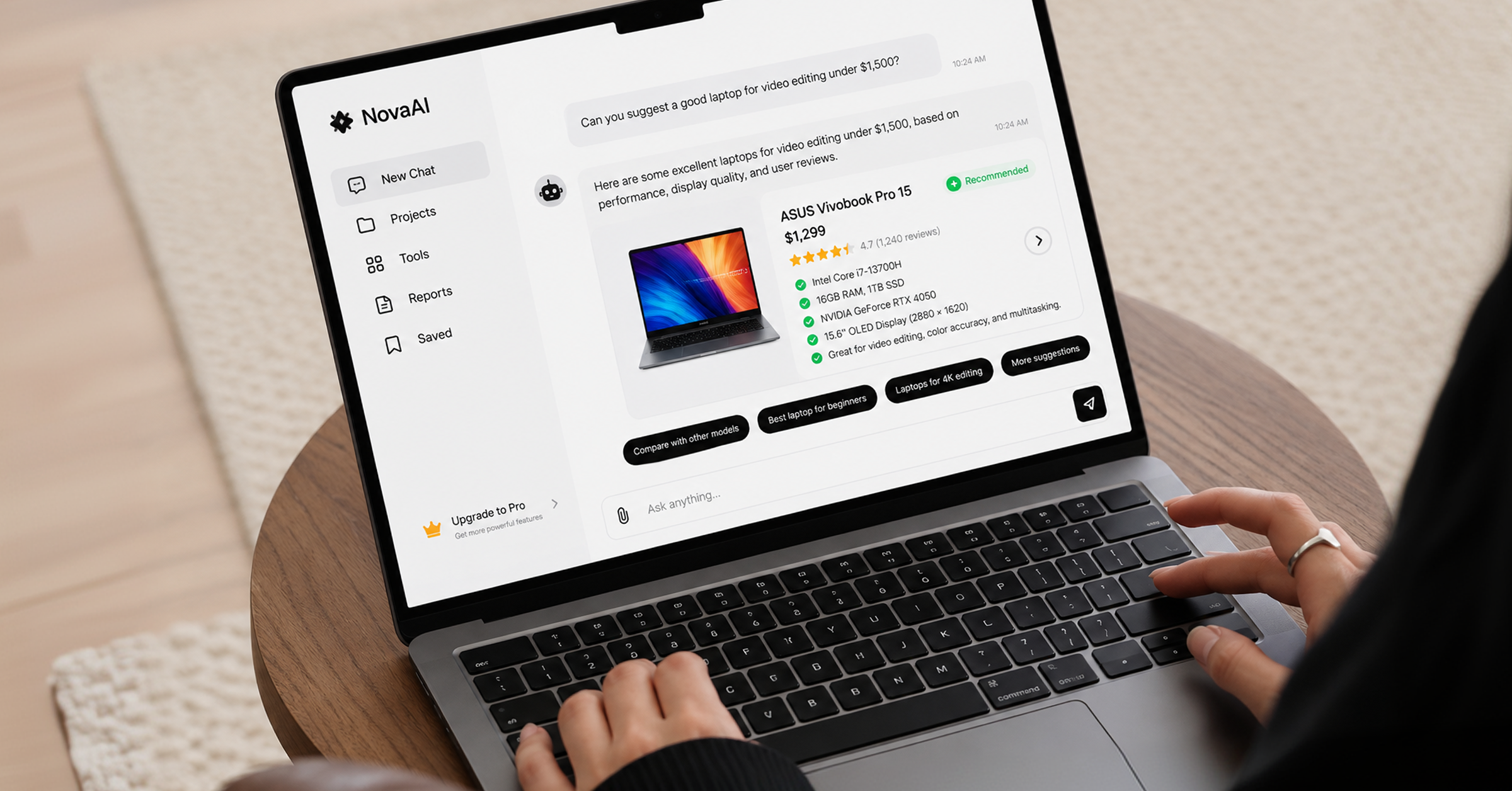
That goal is quietly being replaced. Today a buyer opens ChatGPT, Perplexity or Gemini and asks, "What's the best platform for this?" or "Which agency should I hire?" They don't get ten blue links. They get a short, confident answer with a few names in it.
If your brand is one of those names, you're in the running. If it isn't, you may never know you lost the deal. Ranking gets you found. Being recommended gets you chosen. Here's what changed in AI search, and how to get your brand recommended by AI tools like ChatGPT, Gemini and Google's AI Overviews.
Why a top Google ranking isn't enough anymore
People still search. They just stop before the click. In the first four months of 2026, 68% of US Google searches ended without a click, up from 60% in 2024, according to SparkToro research covered by Search Engine Land.
AI answers are a big reason why. AI Overviews now appear on more than 20% of Google searches, and when they do, click through rates fall by nearly 60%. Google also says AI Mode has passed 1 billion monthly users, with query volume more than doubling each quarter. A growing share of discovery now happens inside an AI answer, not on a results page.
The brands that still win are the ones AI chooses to mention. Seer Interactive's study of 5.47 million queries found that pages cited inside an AI Overview earn about 2.1% CTR, while uncited pages on the same results page earn about 0.9%. Same page, same query. The difference is whether AI recommended you.
We explored this shift in our look at 2026 digital marketing trends. The takeaway hasn't changed: visibility now depends on whether AI trusts your brand enough to name it.
Ranking on Google vs. being recommended by AI
Google ranks pages. AI recommends brands. That one shift changes what you optimize for, what you measure and what "winning" looks like.
The biggest difference: ranking is something your website earns. A recommendation is something your whole brand earns. AI builds its view of you from everything it reads, not just the pages you publish.
The path from SEO to AI recommendations: AEO, GEO and AI visibility
You don't abandon SEO to get recommended. You build on it. Along the way you'll hear three newer terms, and each one is a step up the same ladder.
- SEO makes your pages discoverable and trusted, so they rank. AI tools draw heavily on pages search engines already crawl and trust.
- AEO shapes your content into clear, direct answers that featured snippets, voice assistants and AI Overviews can lift.
- GEO earns you a place in the answers AI tools write, from ChatGPT to Perplexity to Google's AI Mode.
- AI visibility is the result: how often, how accurately and how favorably AI mentions and recommends your brand.
Each layer depends on the one below it. Rankings get you into the conversation. Answers make you useful. Citations make you credible. Put together, they make your brand AI recommends.
How to become the brand AI recommends
AI recommends brands it can understand, verify and trust. Here's how to give it every reason to name you.
- Keep your ranking foundation strong. Fix crawl issues, speed up key pages and keep your site structure clean. A fast, well built website is still the first thing both search engines and AI tools evaluate.
- Answer the questions buyers ask AI. Think "best option for," "alternatives to," and "how do I choose." Build pages that answer those questions in the first two sentences, then go deeper.
- Make your content easy to quote. Clear headings, short paragraphs, lists, comparison tables and schema markup help AI lift your content accurately. Good structure is a design decision too; see how design drives marketing performance.
- Publish proof only you can offer. Original research, proprietary data, case studies and expert viewpoints give AI a reason to cite you over a competitor.
- Get talked about beyond your website. AI weighs what others say about you. Earn mentions in trade publications, review platforms, podcasts, LinkedIn and the communities where your category is discussed.
- Tell one consistent story everywhere. Your positioning, services and proof points should match across your site, social profiles, directories and press. A clear brand identity and design system keeps that story consistent, and mixed signals lead to vague or wrong recommendations.
- Track recommendations, not just rankings. Ask AI tools the questions your buyers ask. Note whether you're named, how you're described and who shows up instead. Tie that to leads and pipeline, not clicks alone.
Frequently asked questions
What does it mean to be recommended by AI?
It means tools like ChatGPT, Perplexity, Gemini or Google's AI Overviews name your brand when someone asks a question in your category. Unlike a search ranking, a recommendation puts your brand directly inside the answer.
Is SEO still important if people use AI to search?
Yes. AI tools draw heavily on pages that search engines already crawl, index and trust. Strong SEO is the foundation that AEO and GEO build on.
What is the difference between SEO, AEO and GEO?
SEO helps your pages rank in search results. AEO shapes your content into direct answers for snippets, voice and AI Overviews. GEO earns your brand a citation inside answers written by generative AI tools.
How can I check if AI recommends my brand?
Ask ChatGPT, Perplexity, Gemini and Google the questions your buyers ask. Record whether your brand appears, how it's described and which competitors are named. Repeat monthly to track your AI visibility over time.
The bottom line
Page one still matters. It's just no longer the finish line. The new finish line is the moment a buyer asks AI for advice and hears your name. Brands that treat ranking as the foundation and recommendation as the goal will own the next era of discovery.
At Clay9, we help brands make that leap, with SEO and AI search services that cover everything from technical SEO to content built to be cited and recommended by AI. Ideas, shaped to fit how people search today. Let's talk about where your brand shows up in AI answers, and where it should.
Sources
- Google zero click searches hit 68% in early 2026, Search Engine Land, June 2026
- Google AI Overviews CTR shows early signs of recovery, Search Engine Land, April 2026
- GEO: Generative Engine Optimization, Aggarwal et al., arXiv, KDD 2024